

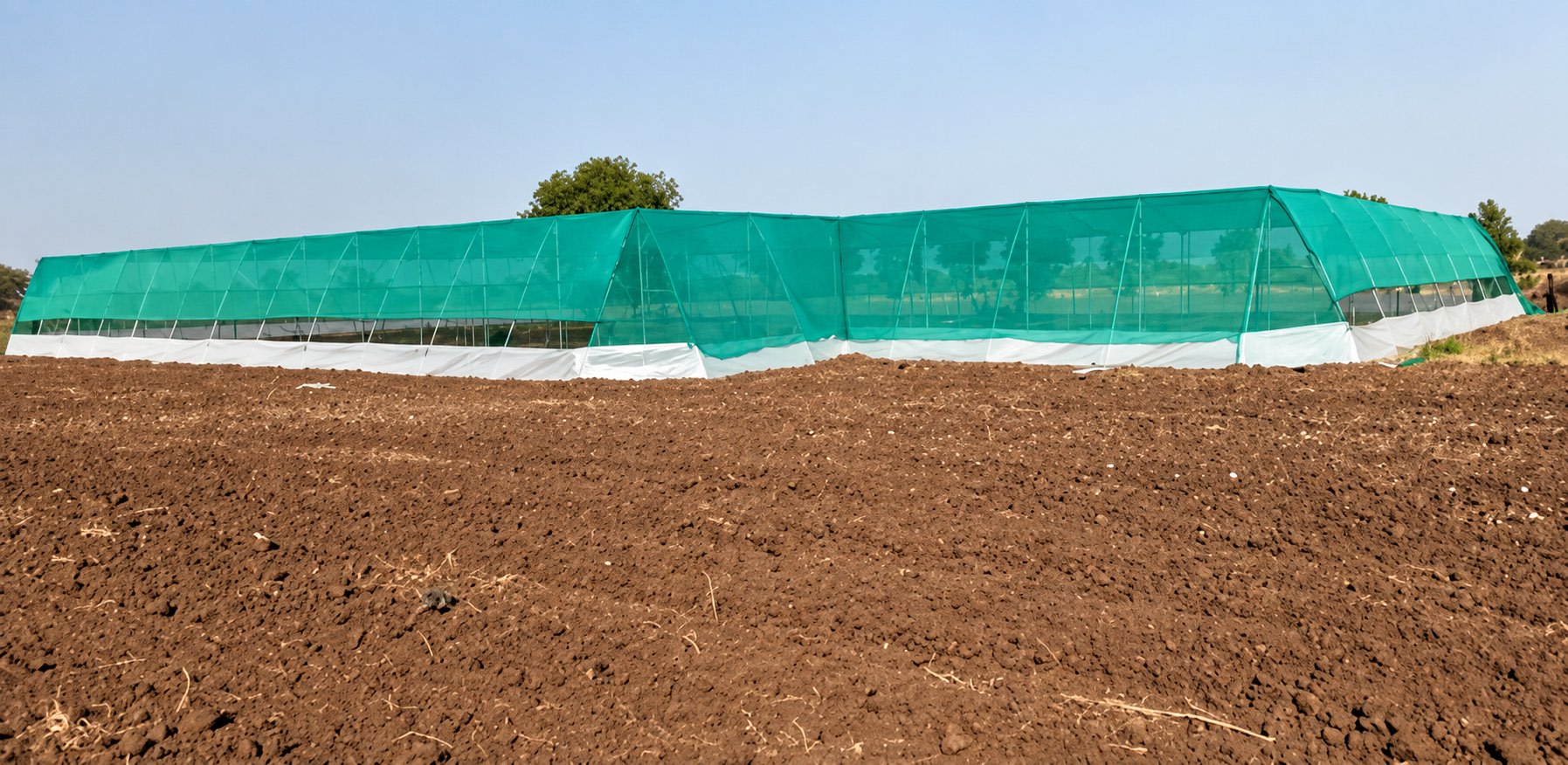
Nursery Shade Net House
Nursery Shade Net House is a protected nursery structure built specifically for raising healthy seedlings and saplings. With a controlled shade level, insect-proof side netting and a fine-spray watering system, it gives young plants a stable, disease-free start before they are transplanted to the open field or a polyhouse — making it a dependable choice for any commercial agriculture nursery.
Key Features
Sturdy GI pipe frame designed for a clean, uninterrupted nursery layout
UV-stabilized HDPE shade net on the roof, selected by the shade percentage your seedlings need
Insect-proof net on the sides to keep whitefly, thrips and aphids away from tender plants
Double-door entry to limit pest entry while workers move in and out
Misting / fogger system for humidity and gentle watering of seedling trays
Space for raised beds or benches to hold pro-trays and grow bags
Drainage-friendly floor with ground cover to reduce weeds and waterlogging
Customized length, width and height as per nursery capacity
Benefits of Nursery Shade Net House
Produces uniform, vigorous seedlings with better survival after transplanting
Lowers the risk of virus-carrying insect attack in the early growth stage
Protects young plants from harsh sun, heavy rain and hail
Supports better germination through steady moisture and temperature
Allows year-round seedling production, not just in favourable seasons
Helps in hardening of grafts and tissue culture plants before field planting
Opens a steady income stream through commercial seedling sales to nearby farmers
Suitable Crops
Nursery Shade Net House is commonly suitable for:
Vegetable Seedlings (Tomato, Chilli, Capsicum, Brinjal, Cabbage, Cauliflower)
Fruit Plant Saplings and Grafts (Pomegranate, Mango, Citrus, Guava)
Flower Seedlings (Marigold, Gerbera, Chrysanthemum)
Sugarcane Bud Chip Seedlings
Ornamental and Indoor Plants
Forestry and Plantation Saplings
Crop suitability depends on the local climate, cultivation method and market requirements.
Nursery Shade Net House Structure
A typical Nursery Shade Net House consists of:
Sr. No. | Component |
|---|---|
1 | GI pipe frame with foundation |
2 | UV-stabilized HDPE shade net roof |
3 | Insect-proof side netting |
4 | Double-door entry system |
5 | Structural fasteners and net-locking profiles |
6 | Misting / fogger system |
7 | Drip or overhead irrigation lines |
8 | Seedling benches or raised beds |
9 | Ground cover sheet |
10 | Required nethouse accessories and fixtures |
Nursery Shade Net House Design
A Nursery Shade Net House should be planned around:
Number of seedlings or trays to be raised per cycle
Type of plants and the shade percentage they need
Local temperature and humidity through the year
Water source and irrigation method
Working space for movement, packing and dispatch
Nursery budget
A well-planned layout with the right shade and insect net combination makes a noticeable difference to seedling quality and nursery productivity.
Nursery Shade Net House Cost
The cost of a Nursery Shade Net House depends on the total area, frame height, shade and insect net quality, misting and irrigation setup, benches or beds, and site conditions.
To get an accurate quotation, share your nursery size, the plants you plan to raise and your site location with our team.
Why Choose Rudra Enterprises for a Nursery Shade Net House?
As a nethouse manufacturer in Pune, Rudra Enterprises builds nursery structures for seedling growers, fruit plant nurseries and farmer groups. We take up projects across India, and our own team handles fabrication, net fitting and erection so the nursery is ready to use from day one.
Healthy crops start with healthy seedlings — and that begins with the right shade, clean insect protection and proper watering inside the nursery.
इस स्ट्रक्चर में दिलचस्पी है?
अपनी ज़मीन की डायमेंशन बताएं, हम स्ट्रक्चरल सुझाव और कोटेशन के साथ जवाब देंगे।