

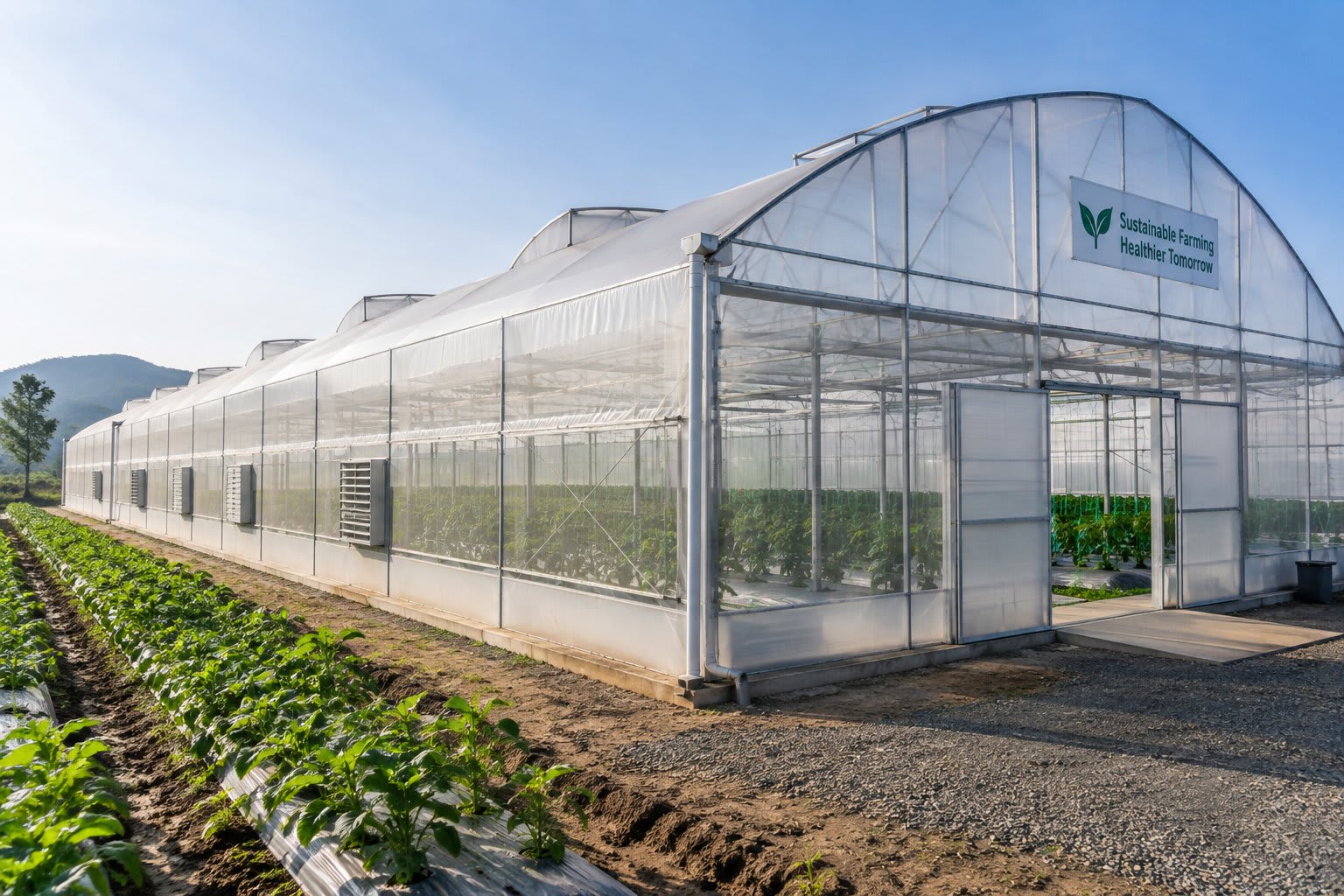
Hydroponic Polyhouse
Approx. Rs 2150 / Square Meter
Hydroponic Polyhouse combines a climate-controlled structure with a soil-less, nutrient-solution growing system — giving precise control over both the growing environment and plant nutrition. It is one of the most advanced hydroponic greenhouse formats for consistent, export-quality yields.
Key Features
Soil-less growing system — NFT, Dutch bucket or media-bed based
Nutrient dosing system with EC/pH-controlled fertigation
Grow channels/gutters or grow bags in place of soil beds
GI structure with poly film or polycarbonate covering
Compatible with fan & pad or natural ventilation for climate control
Crop support/trellising system for vertical growth
Insect-proof netting and water recirculation for efficient use
Optional CO2 enrichment for higher yields
Benefits of Hydroponic Polyhouse
Up to 90% more water-efficient than soil-based cultivation
Higher yield and uniform quality through precise nutrition
Eliminates soil-borne diseases and pests
Enables multiple crop cycles per year
Consistent, export-quality produce
Reduces labour for weeding and soil preparation
Suitable for year-round, high-density cultivation
Suitable Crops
Hydroponic Polyhouse is commonly suitable for:
Cherry Tomato
Capsicum
Cucumber
Lettuce & Leafy Greens
Strawberry
Cut Flowers (Rose, Gerbera, Carnation)
Crop suitability depends on the local climate, cultivation method and market requirements.
Hydroponic Polyhouse Structure
A typical Hydroponic Polyhouse consists of:
Sr. No. | Component |
|---|---|
1 | GI tubular/truss structure |
2 | Poly film or polycarbonate covering |
3 | NFT/Dutch bucket/media-bed growing system |
4 | Nutrient tank and dosing unit |
5 | EC/pH controller |
6 | Grow channels/gutters or grow bags |
7 | Crop support/trellising system |
8 | Insect-proof netting |
9 | Water recirculation system |
10 | Required greenhouse accessories and fixtures |
Hydroponic Polyhouse Design
The design of a Hydroponic Polyhouse should be selected according to:
Crop type and growing system (NFT / Dutch bucket / media bed)
Required nutrient dosing capacity
Climate control method (fan-pad or natural ventilation)
Available land area and layout
Water source and recirculation setup
Farming budget
A properly engineered, site-specific design helps ensure uniform nutrient delivery, structural strength and long-term performance.
Hydroponic Polyhouse Cost
The cost of a Hydroponic Polyhouse depends on the growing system type, nutrient dosing automation, structure covering, climate control method, and site conditions.
For an accurate price, the project should be evaluated according to the required area, crop and growing system.
Why Choose Rudra Enterprises for Your Hydroponic Polyhouse?
Rudra Enterprises is known among growers near Pune for complete hydroponic greenhouse projects — from site survey and system design to fertigation automation, structure fabrication and installation, backed by hands-on experience across Maharashtra.
For a Hydroponic Polyhouse to deliver consistent, export-quality results, correct system design and professional installation are essential for long-term performance.
इस स्ट्रक्चर में दिलचस्पी है?
अपनी ज़मीन की डायमेंशन बताएं, हम स्ट्रक्चरल सुझाव और कोटेशन के साथ जवाब देंगे।