

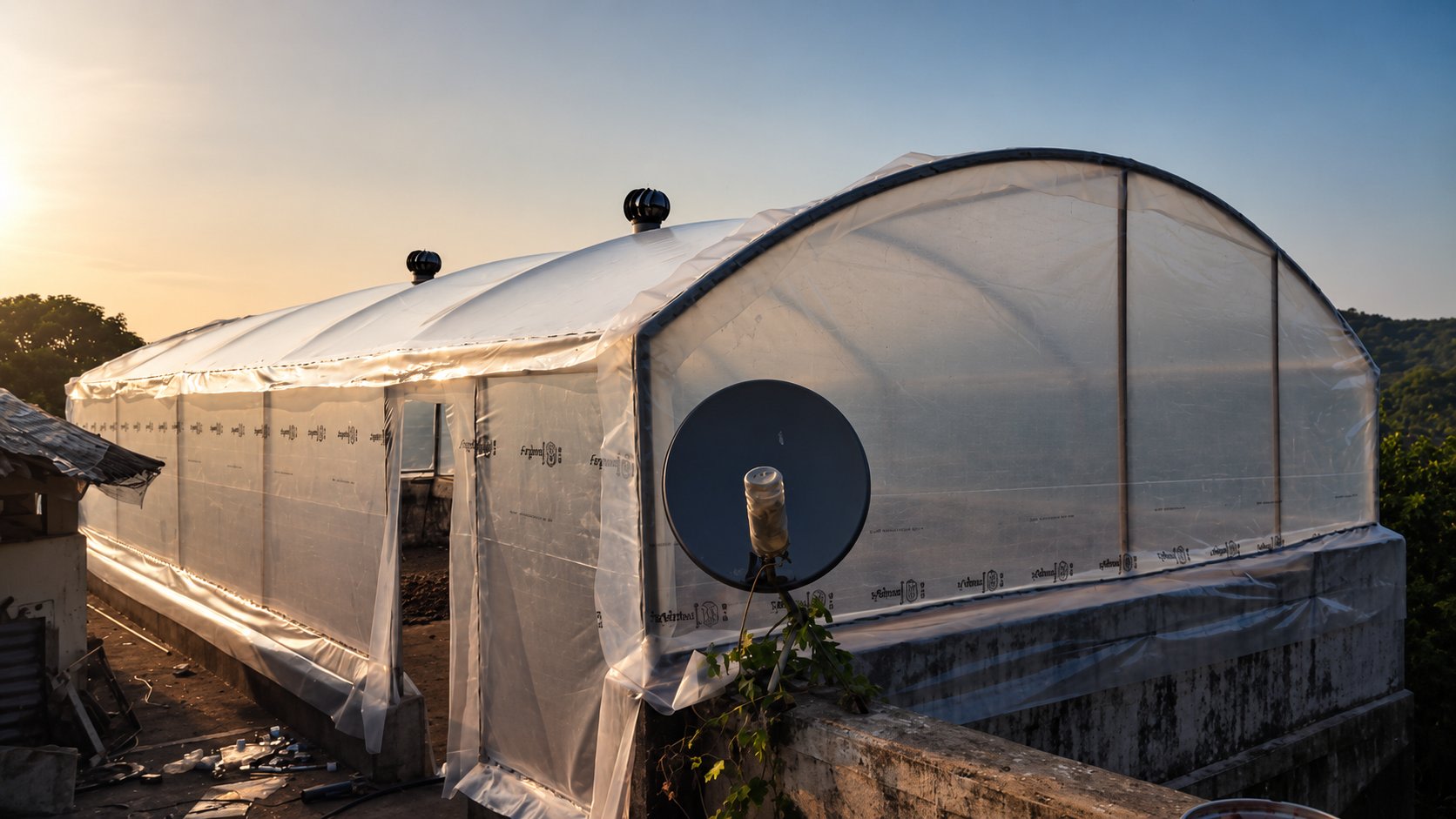
Dryer Room
Dryer Room is a closed, sun-heated drying structure built on a galvanized iron frame and covered with UV stabilized polyfilm. Sunlight passing through the film warms the air inside, and controlled vents carry the moist air out — so harvested produce dries faster, more evenly and away from dust, rain, birds and insects. It works as a solar dryer for vegetables, spices and fish, and as a raisin (bedana) shed for grape growers.
Key Features
Galvanized iron frame that resists rust in a warm, humid drying space
UV stabilized polyfilm cover that traps solar heat inside the room
Roof and side vents to let moist air escape and keep air moving
Drying racks, trays or hanging lines planned to suit the crop
Insect net on openings to keep flies and pests off the produce
Raised or paved floor option for cleaner handling
Exhaust fans can be added where faster air flow is needed
Built in any length and width to match the daily drying load
Benefits of a Dryer Room
Faster and more uniform drying than open sun drying on the ground
Clean, hygienic produce free from dust, soil, bird droppings and insects
Protection from sudden rain, so a drying batch is not lost to weather
Better colour, aroma and market grade of the dried product
Less post-harvest loss and less spoilage from fungus
Free solar heat — little or no fuel or electricity cost
Less labour for spreading, covering and turning produce
Lets farmers store and sell dried produce later for a better rate
Suitable Produce
A Dryer Room is commonly used for drying:
Grapes into Raisins (Bedana / Kishmish)
Red Chilli
Turmeric and Ginger
Onion and Garlic flakes
Moringa, Curry Leaves and Other Herbs
Fruits such as Mango, Banana, Fig and Amla
Fish and Seafood
Seeds and Grains before storage
Drying time and method depend on the produce, its moisture content, the weather and the quality the market expects.
Dryer Room Structure
A typical Dryer Room consists of:
Sr. No. | Component |
|---|---|
1 | GI foundation and columns |
2 | GI arches, purlins and bracing |
3 | UV stabilized polyfilm roof and side covering |
4 | Profile and zig-zag spring for film locking |
5 | Roof / side ventilation openings |
6 | Insect net on vents and openings |
7 | Drying racks, trays or hanging wires |
8 | Entry door |
9 | Exhaust fans (optional) |
10 | Required dryer room accessories and fixtures |
Dryer Room Design
A Dryer Room should be designed after considering:
Type of produce and how it must be dried (spread, trays or hanging)
Quantity to be dried per batch
Sunlight hours and humidity at the site
Wind speed in the region
Available land and its direction to the sun
Loading and unloading access for labour and vehicles
Project budget
Getting the ventilation, direction and rack layout right for the crop is what makes a dryer room dry evenly batch after batch.
Dryer Room Cost
The cost of a Dryer Room depends on its size, frame height, pipe and film quality, the number and type of racks or trays, ventilation and fan requirement, flooring and site conditions.
Tell us the produce you dry, the batch quantity and your location for an exact quotation.
Why Choose Rudra Enterprises for a Dryer Room?
Rudra Enterprises is a dryer room manufacturer in Pune that uses the same galvanized frame and polyfilm work we do for our polyhouses. The GI pipes, polyfilm, insect net, profiles and springs come from our own supply, so every part fits and nothing waits on an outside vendor.
From a raisin shed in Maharashtra's grape belt to a spice or fish dryer in another state, we send the complete material by road transport and build it on site — a practical drying solution for farmers anywhere in India.
GI structure · UV stabilized polyfilm cover · racks / trays / hanging lines
इस स्ट्रक्चर में दिलचस्पी है?
अपनी ज़मीन की डायमेंशन बताएं, हम स्ट्रक्चरल सुझाव और कोटेशन के साथ जवाब देंगे।